
AI tools can now generate a logo, color palette, and typography in minutes — but letting AI make those visual decisions for you comes with real costs. Your identity starts to blend in with everyone else using the same tools, your legal protection over the output can be weaker than you'd assume, and a finished-looking logo is not the same as a complete brand system. The fix isn't avoiding AI; it's using it after the strategic decisions are made, not instead of them.
Last week I watched a founder generate a logo, a color palette, and a font pairing in about four minutes. I was really impressed, but I don't think she realized the expensive part hadn't happened yet.
That's where we are with AI and visual identity right now. The tools are genuinely cool. Looka, Canva AI, Midjourney, whatever's built into Figma this month, they can take you from nothing to something polished-looking faster than you could brief a designer over coffee. I use these tools myself, most weeks, and I actually like what they've done for my process. My execution is faster, my timing is better, I get to more ideas in a morning than I used to get to in a week.
That's not just a feeling either, the generative AI market for creative work is projected to grow from $4.06 billion in 2025 to $5.38 billion this year, and McKinsey has found that teams who build it properly into their workflow can cut prototyping cycles by up to 70%. So this isn't an "AI bad" post.
But speed and identity aren't the same thing. And the cost of skipping the thinking part doesn't disappear. It just shows up later, somewhere harder to trace back to the decision that actually caused it. In a world that's about to be flooded with AI-made brands, that thinking part is the one thing a model can't do for you, and it's exactly what ends up making the difference between a brand people remember and one that blends into the scroll.
Here's what I keep seeing when people let AI make the call on what their brand looks like.

Everything starts to look the same
AI doesn't invent. It predicts the most likely output based on everything it's already seen. That's not a knock on the technology, it's just how it works. But it means the more people use the same tools with the same prompts, the more everyone's output drifts toward the same visual neighborhood.
You've probably noticed this without naming it. Line up a row of AI-native startup logos and there's a pattern: an orbital shape, a gradient blue, a rounded sans-serif that shows up everywhere. Other designers have started pointing at it too, that the internet is narrowing toward the same "safe" palettes and layouts because that's what these models were trained to reproduce.
When your logo looks like everyone else's logo, you didn't save money on design. You spent it on being forgettable.
You might not actually own what you made
This one nobody tells you upfront, and it's a legal question, not just an aesthetic one.
In the US, the USPTO doesn't ask whether AI made your logo. It cares about distinctiveness and use in commerce, so plenty of AI-generated marks get trademarked without issue. But copyright is a different protection, and pure AI output usually doesn't qualify for it, because US law still requires a human author. So if someone copies your logo outright, your legal ground to stop them can be thinner than you'd assume.
There's another layer to this that I don't think gets talked about enough. These models were trained on massive pools of existing logos and marks, so what they hand back to you can end up echoing something that's already out there, without either of you knowing it. There have already been cases of AI-generated logos landing uncomfortably close to marks someone else had registered first.

A logo isn't a finish line
This is the one I actually worry about most, because it shapes everything that comes after.
A logo feels like a finished brand. It isn't; it's one asset. A real visual identity is a system, how your colors behave together, what your typography does at three different sizes, what your photography looks like, how all of it holds up across your website, your Instagram grid, and yes, your invoices.
When AI hands you a finished-looking logo in four minutes, it's easy to feel done and stop right there. Then six months in, the Instagram templates don't match the website, the invoice looks like it belongs to a different company, and nobody can quite say why the whole thing feels a little off. It's because the system was never actually built. Only the top layer was.
Where I still think AI belongs
None of this means AI has no place here. It clearly does, just not where most people are putting it.
It's genuinely useful for fast visual exploration before you've committed to a direction, for generating color and type options to react to rather than adopt outright, and for resizing and adapting a system once one already exists.
What it's not good at is telling you what your brand should stand for, or what makes it different from the five competitors circling the same market. Those are judgment calls, and they need someone who actually understands the business behind the logo, not just the prompt.
The founders whose brands I see holding up over time are the ones who make those calls first, positioning, personality, what they refuse to look like, and only then open the AI tool. Same technology, a much better result, because the brief was clear before the machine started guessing.
One last thing
I'm not writing any of this from the sidelines. AI has genuinely made me faster and better at my job, I lean on it constantly and I'm not going back. But the more brands get built this way, the more that one piece nobody can automate, the actual thinking, becomes the whole difference between brands that stand out and brands that disappear into a sea of identical logos.
AI hasn't made branding cheaper. It's made the visible part cheaper. Recognition and trust still cost what they always did: clarity, before you touch the tools.
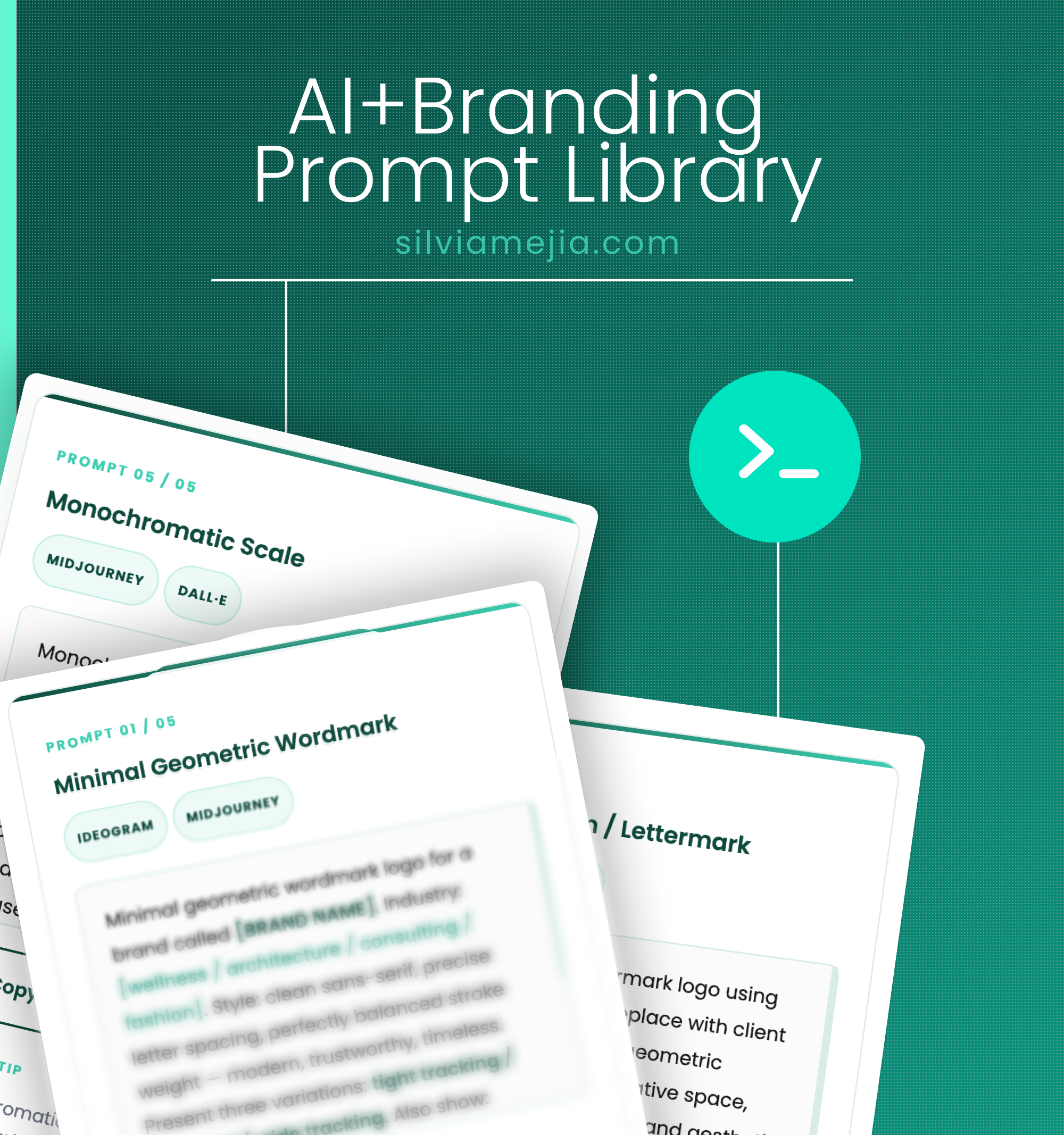
If you want to work through that clarity before you open any AI tool, I put together a couple of things while going through this exact process on my own brand:
Silvia Mejia is a Design Strategy Leader with 15+ years of experience in brand systems, UX/UI, and product design. She has worked with healthcare, energy, B2B industrial, and consumer brands, and creates practical resources for designers who want to work with more clarity and intention.
.png)
Related Content